
So, what does 2016 have in store for the Indian markets? Will they be able to take a giant leap forward in the leap year, and what are the key risks?

Over the past one-and-half years, the number of stocks trading below their respective face value has increased 29 per cent after a sharp correction in stocks of small-cap companies.

Having exposure to international funds and gold is a must for those who have foreign currency-denominated goals.
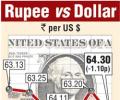
The local currency recovered some ground after the Reserve Bank of India (RBI) was said to have stepped in through state-run banks, helping the rupee to end at 64.30, a fall of 110 paise or 1.74 per cent.

S&P BSE Midcap index and S&P BSE Smallcap were down 2% and 1.3% respectively

Media, brokers and bullion traders have been predicting various numbers which gold will touch subsequently.

Besides Budget, markets will be driven by global events and the outcome of assembly elections.

Hedge fund redemptions and margin calls on leveraged investors will trigger further selling.

India's macro finances are getting into good shape.

Analysts caution against volatility and recommend buying stocks of companies that are on strong fundamental footing that have been beaten down badly in the recent carnage.

The IMF on Tuesday cut India's economic growth forecast by 0.5 percentage points to 9 per cent for the current fiscal year, with its chief economist Gita Gopinath saying that the slight downgrade is mainly due to the impact of the spread of the Omicron variant. "If you look at the 2021-22 fiscal year, we have a slight downgrade of -0.5 percentage points and for the next fiscal year 2022-23 we have a slight upgrade of 0.5 percentage points. So, growth for the previous fiscal year is now nine per cent and for this year now is at nine per cent. We moved it up slightly," Gopinath told reporters during a news conference in Washington. In its latest update of World Economic Outlook on Tuesday, the International Monetary Fund has cut India's economic growth forecast to 9 per cent for the current fiscal year ending March 31, joining a host of agencies which have downgraded their projections on concerns over the impact of the spread of Omicron on business activity and mobility.

Investment banking star and Moelis India Chief Executive Officer Manisha Girotra remembers a colleague who wanted to resign because she needed to attend to her parents' health issues in a different state. Rather than quit a promising career, she was given the flexibility of working from home on Fridays, which was unusual in the pre-pandemic days. This allowed her to take care of her parents' visits to the doctor and other health-related needs without quitting her job. She would be back in the city office on Mondays.

The breadth, indicating the overall health of the market, turned negative from positive

Despite the 3 per cent gain in September 2019, the FPI sell-off during the quarter has seen the benchmark indices - the S&P BSE Sensex and the Nifty 50 register negative returns in Q3CY19.
Markets reversed early losses and ended higher as investors picked up beaten down frontline stocks.

Global cues lift Sensex 364 points; Nifty ends above 8,650.
Aviation companies were in focus with all the three airliners SpiceJet, InterGlobe Aviation and Jet Airways adding in the range of 2% to 3% on the BSE
There were more than three losers against every gainer on BSE
Adani Ports, HUL and L&T gained the most, while ICICI Bank, ONGC, GAIL and Tata Steel lost the most

Metal stocks were trading under pressure while IT, auto, realty stocks gained in today's deals

Bank shares were the top gainer in early trades with Bank of Baroda up over 4%.

The apex court had observed that the allocation was arbitrary, illegal, and resulted in unfair distribution of national wealth.

The broader NSE index has fallen about 0.9% as investors wait for corporate results

Experts prefer domestic consumption-driven plays and defensives such as information technology and pharmaceuticals

Do a proper asset allocation and invest through systematic investment plans where one can benefit.

In the broader market, the S&P BSE Midcap and the S&P BSE Smallcap indices gained 0.5% and 0.4%, respectively.
Tata Motors (down 1.7%) was the top loser on Sensex and Nifty, while Lupin (1.6%) gained the most.

In a bull-case scenario it sees the Sensex at 61,000 levels, while it's bear case scenario pegs the Sensex at 41,000 levels by December 2021.

On BSE, 1,469 shares fell and 1,200 shares rose. A total of 190 shares were unchanged.
.jpg)
Some analysts believe that markets are expected to remain unclear and would have to wait until tomorrow's US non-farm payrolls data.

The breadth, indicating strength of the market was strong
China will lead Asia-Pacific sovereigns in economic growth in 2008, followed by India, Standard & Poor's Ratings Services said. Though Japan is still the largest economy in the region, China' growth could position the country as the biggest economy in Asia-Pacific and the second-largest globally within the next five years.

If the rupee falls further, it would negatively impact the dollar-based returns of foreign investors, and could influence foreign flows into India.

The Nasdaq Composite hit a high of 5,143.316.

Nifty PSU bank index dropped nearly 2%
ONGC was the top performer while private banking major ICICI Bank extended gains
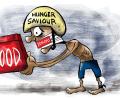
Given that there has been no negative news flow around Zomato, analysts believe it's time to lap up the shares at lower levels.
The broader market outperformed with the S&P BSE Midcap down 0.3%, while the S&P BSE Smallcap was little changed.
S&P BSE Midcap shed 0.8% while S&P BSE Smallcap tumbled 0.6%

